Discover Speech Therapy offers comprehensive
evaluations and treatment in the following areas:

early intervention
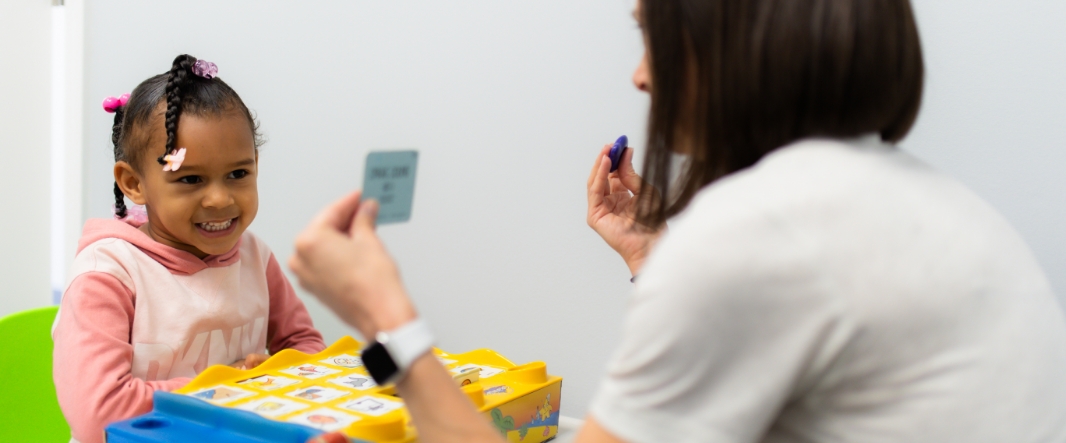
When working with children in early intervention (birth- 3rd birthday), focus is often on developing early social skills, foundational language skills such as joint attention, using gestures/signs, and learning to use first words to communicate wants and needs.

apraxia
Also referred to as Childhood Apraxia of Speech (CAS), this motor speech disorder is characterized by highly unintelligible speech. In this disorder, the brain has difficulty communicating the correct movement patterns to the muscles needed for speech production (lips, jaw, tongue) in the absence of muscle weakness. The child knows what he or she wants to say, but has great difficulty producing speech.

receptive language
Receptive refers to the understanding of language and our ability to listen to language going on in our world. Children who have difficulty following directions, answering questions, understanding what gestures mean, or taking turns with others during conversation may have receptive language needs.

social communication
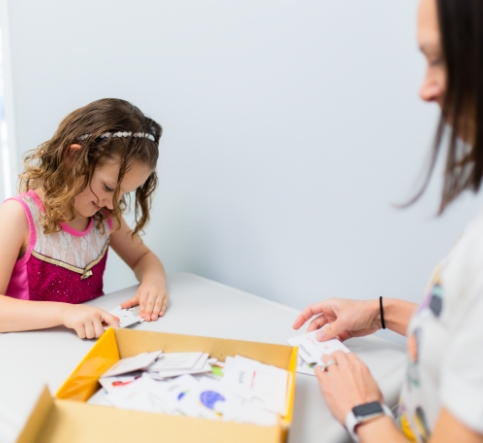
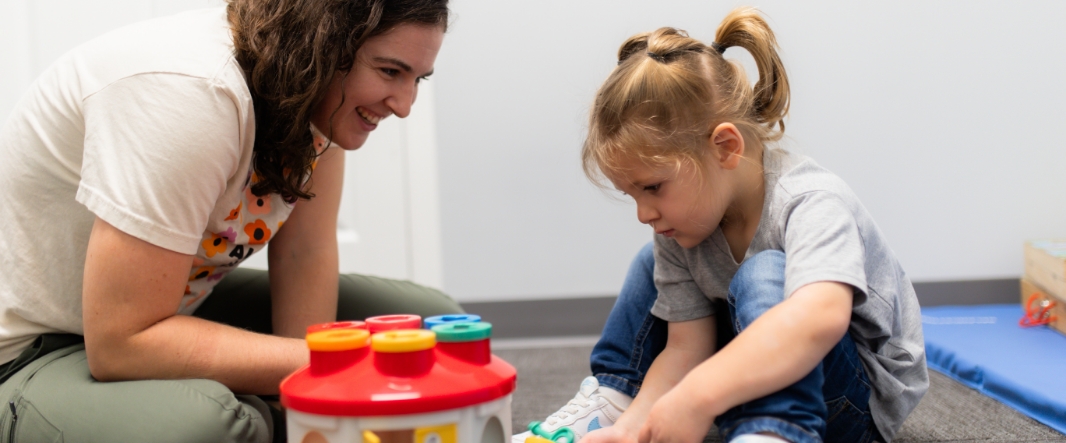
Social communication refers to the appropriate use of language in a social setting, also referred to as social skills. Children who have difficulty starting a conversation, engaging in appropriate eye contact and joint attention, making and keeping friends, understanding feelings, and sharing and playing cooperatively with others may have pragmatic language needs. Often, children with autism benefit from social skills as this is an area of difficulty.

articulation/phonology
Speech sound disorders occur when children have substitutions and/or distortions on certain sounds (articulation) or a pattern of errors (phonology). There is a wide range for the acquisition of speech sounds (from 2 years to 7 years) so check the norms below if you have a concern regarding your child’s speech sounds.

feeding
Also referred to as CAS or just “apraxia”, this motor speech disorder is characterized by highly unintelligible speech. In this disorder, the brain has difficulty communicating the correct movement patterns to the muscles needed for speech production (lips, jaw, tongue) in the absence of muscle weakness. The child knows what he or she wants to say, but has great difficulty producing speech.

stuttering
Receptive refers to the understanding of language and our ability to listen to language going on in our world. Children who have difficulty following directions, answering questions, understanding what gestures mean, or taking turns with others during conversation may have receptive language needs.

AAC
AAC (augmentative and alternative communication) is used to help limited verbal or non-speaking individuals communicate with others. AAC can be high tech, such as a speech-generating device or eye gaze system, or low tech, such as pictures and signs. The use of signs, pictures, and high-tech devices can be used in conjunction with speech. Signs and pictures are often used with late talking toddlers to help them learn to communicate wants and needs before they are ready to use words. Research shows that using AAC enhances language development, and can provide a way for all to communicate wants and needs.

expressive language
Expressive refers to the ability to express oneself through speaking and writing. Children who have difficulty asking questions, naming items, putting words together in sentences, learning songs and rhymes, using grammatical structures such as pronouns, or starting and keeping a conversation going may have expressive language needs.